
Effective TMJ Treatment in Los Angeles
Are you suffering from jaw pain? Get treated by Los Angeles’s premier TMJ Doctor. Dr Omrani is a board certified TMJ specialist that can help alleviate TMJ related pain and discomfort
 5.0
★★★★★
Google Reviews
5.0
★★★★★
Google Reviews
Expert TMJD Treatment Solutions in Los Angeles
At our specialized TMJ Treatment Center, we offer comprehensive care for those suffering from temporomandibular joint disorders. Our expert team provides cutting edge solutions for jaw pain, facial discomfort, and related symptoms that can significantly impact your daily life. Whether you’re experiencing difficulty chewing, persistent headaches, or jaw stiffness, our tailored TMJ treatments aim to alleviate pain, restore function, and improve your overall quality of life. With a focus on personalized care and advanced techniques, we’re committed to helping you find relief from TMJ disorders and rediscover comfort in your everyday activities.
Make an Appointment
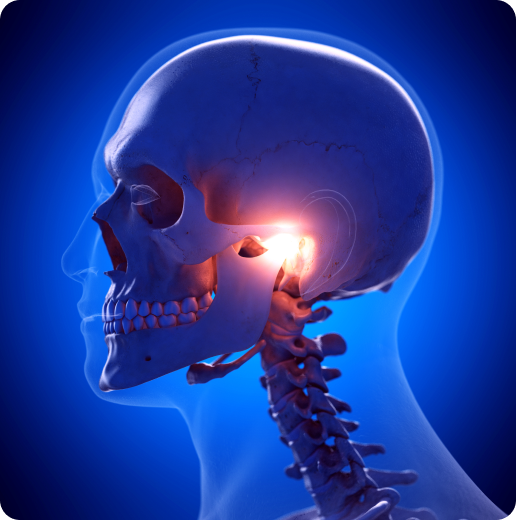
What is TMJD?
Temporomandibular Joint Disorder (TMJD) is a complex condition that affects the jaw joint and surrounding muscles. The temporomandibular joint (TMJ) acts as a hinge that connects the temporal bone of the skull to the lower jawbone (mandible). These joints are located on both sides of the head just in front of each ear where they work in tandem with muscles to control jaw movement. They enable essential functions like chewing, talking, and opening and closing the mouth.
TMJD occurs when there’s dysfunction in one or both joints which can be caused by structural issues, muscular problems, or lifestyle factors. The disorder affects the moving parts of the joints and muscles, resulting in discomfort and pain. While mild cases may resolve on their own, more severe or persistent TMJD often requires professional TMJ treatment to manage symptoms and restore proper jaw function.
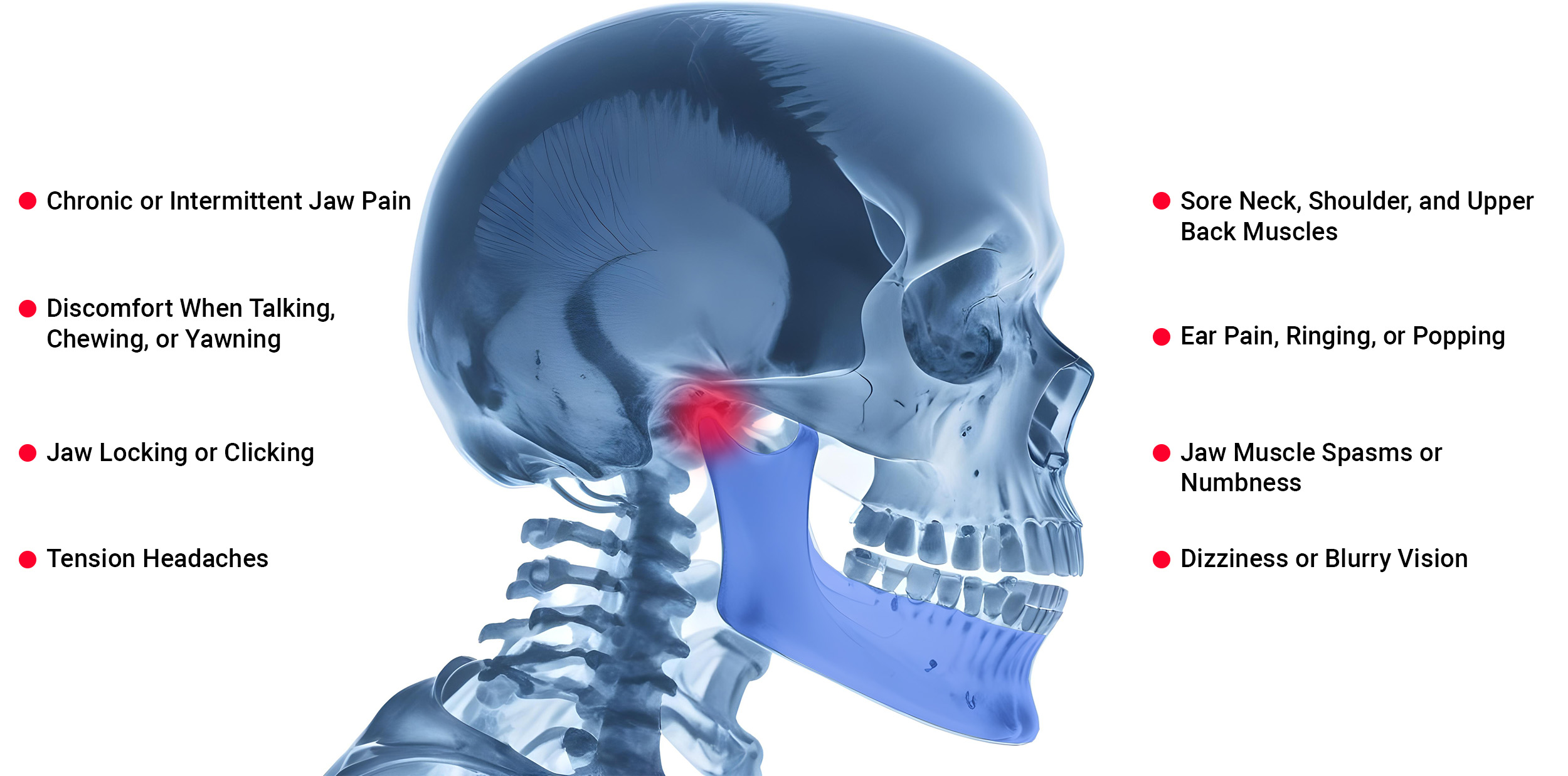
TMJD Resources
What Causes TMJD?
Temporomandibular Joint Disorder (TMJD) can arise from a variety of factors, often involving a complex interplay of physical and environmental elements. Often, it’s a combination of these factors rather than a single cause that leads to the development of TMJD.
How is TMJD Treated?
TMJD treatment is typically tailored to the individual’s specific symptoms and underlying causes. Initial approaches often include conservative, non-invasive methods such as lifestyle modifications, stress management techniques, physical therapy, and the use of oral appliances or splints.
TMJD Treatment Process
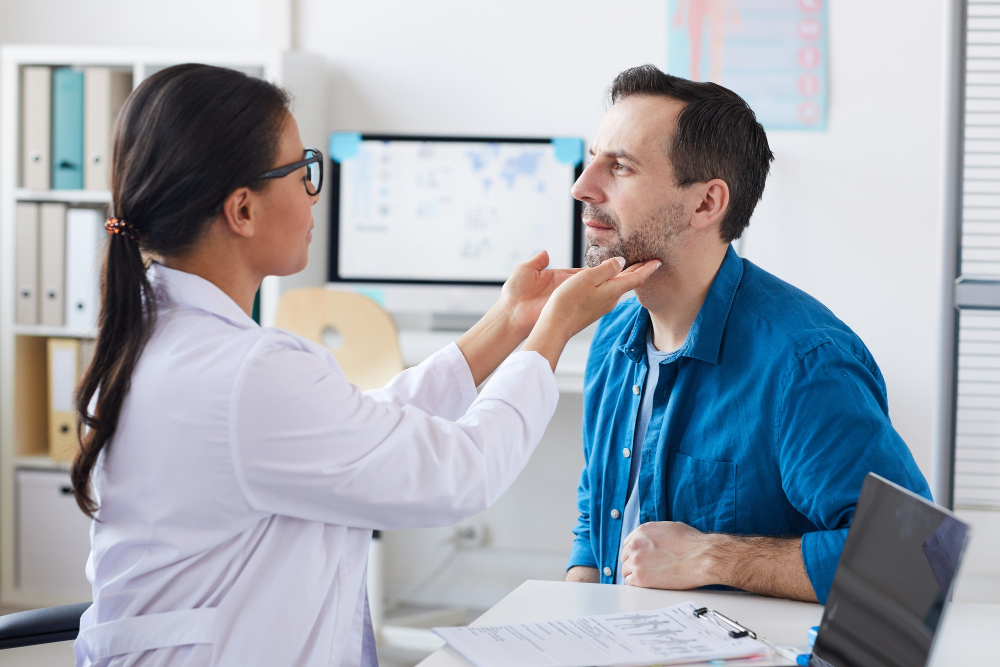
Step 1: Diagnosis
TMJD diagnosis involves a comprehensive evaluation of the patient to assess joint structure and function.
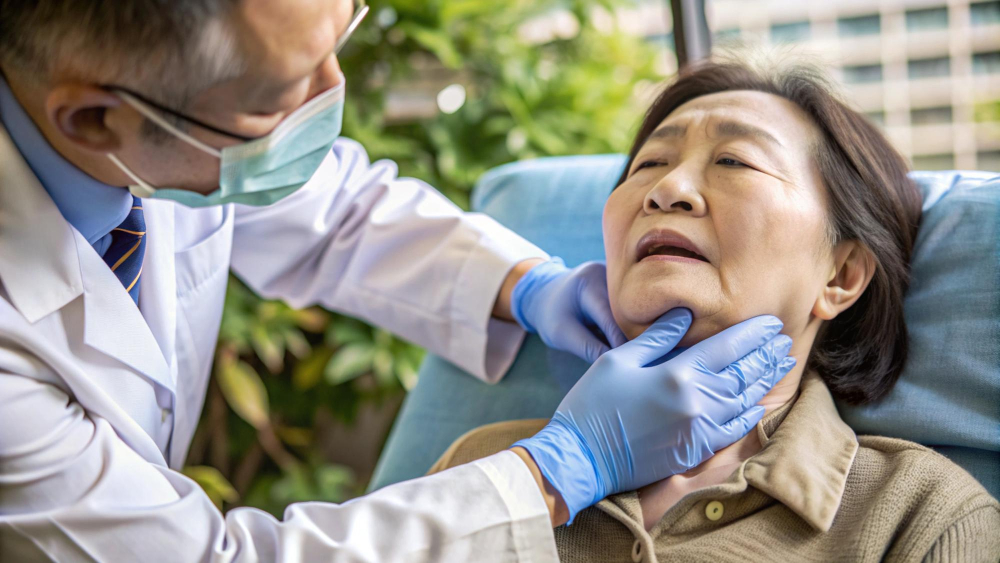
Step 2: Treatment
TMJD treatment is personalized to each patient’s needs and ranges from conservative approaches to more advanced interventions.

Step 3: Follow Up
TMJD follow up involves regular check ins with our TMJD specialists to monitor treatment effectiveness to ensure long-term management and improved quality of life.

Accurate Diagnosing of TMJ Disorders
Temporomandibular joint disorder (TMJD) is typically diagnosed during routine medical or dental examinations. During these exams, a qualified TMJ doctor will assess your TMJ by asking you to open and close your mouth and imitate actions used when chewing and speaking. They will feel the joint and surrounding muscles to detect any pain or tenderness and observe the range of motion in your jaw to see if there are any abnormalities. If TMJ disfunction is found, further imaging tests may be recommended. These comprehensive evaluations help in accurately diagnosing TMJD and formulating an appropriate treatment plan.
Frequently Asked Questions
The best doctor to see for TMJ disorders is an expert board certified TMJ and orofacial pain specialist like the one at Headache TMJ Los Angeles Pain Clinic. Dr Omrani has years of experience providing customized TMJ treatments designed to alleviate TMJ pain and discomfort. She has solidified herself as one of Los Angeles’s premiere TMJ doctors. Contact the Headache TMJ Los Angeles Pain Clinic to schedule an appointment today.
There is no single "most successful" treatment that works for everyone.
The most successful treatments for temporomandibular joint (TMJ) disorders often depend on the severity of the condition, the underlying cause, and individual patient needs.
Conservative treatments like self-management, physical therapy, mouthguards and medications are typically first-line therapies and are often very successful. In more persistent cases, corticosteroid injections, Botox injections and acupuncture can be beneficial. For the severe cases, arthrocentesis, arthroscopy or open joint surgery may be needed. Stress-management and behavioral therapies can also be very effective treatments.
A multidisciplinary approach, combining several of these treatments, often yields the best results.
- Conservative Treatments
- Over-the-Counter Medications: Pain relievers like ibuprofen or acetaminophen are relatively inexpensive, typically under $20.
- Physical Therapy: Sessions can range from $50 to $200 per visit, depending on location and insurance coverage.
- Oral Splints/Night Guards: Custom-made splints from a dentist can cost between $850 to $1,500. Over-the-counter versions are cheaper, ranging from $20 to $50, but they may not be as effective.
- Advanced Therapies (Moderate Cost)
- Corticosteroid Injections: Typically range from $600 to $800 per injection, depending on location and provider.
- PRP injections: These range from $1,000 to $1,300 per injection, depending on location and provider.
- Botox Injections: These range from $300 to $1,500 per session, depending on the number of injections and the provider's expertise.
- Acupuncture: Acupuncture sessions range from $50 to $150 per visit, with the total cost depending on the number of treatments.
- Surgical Interventions (Higher Cost)
- Arthrocentesis: This minimally invasive procedure can cost between $1,000 and $3,000, depending on the surgeon and the facility.
- Arthroscopy: Costs range from $3,000 to $8,000, depending on the complexity and where the procedure is performed.
- Open Joint Surgery: This is the most expensive option, ranging from $10,000 to $50,000 or more, depending on the complexity of the surgery and the need for hospitalization.
