
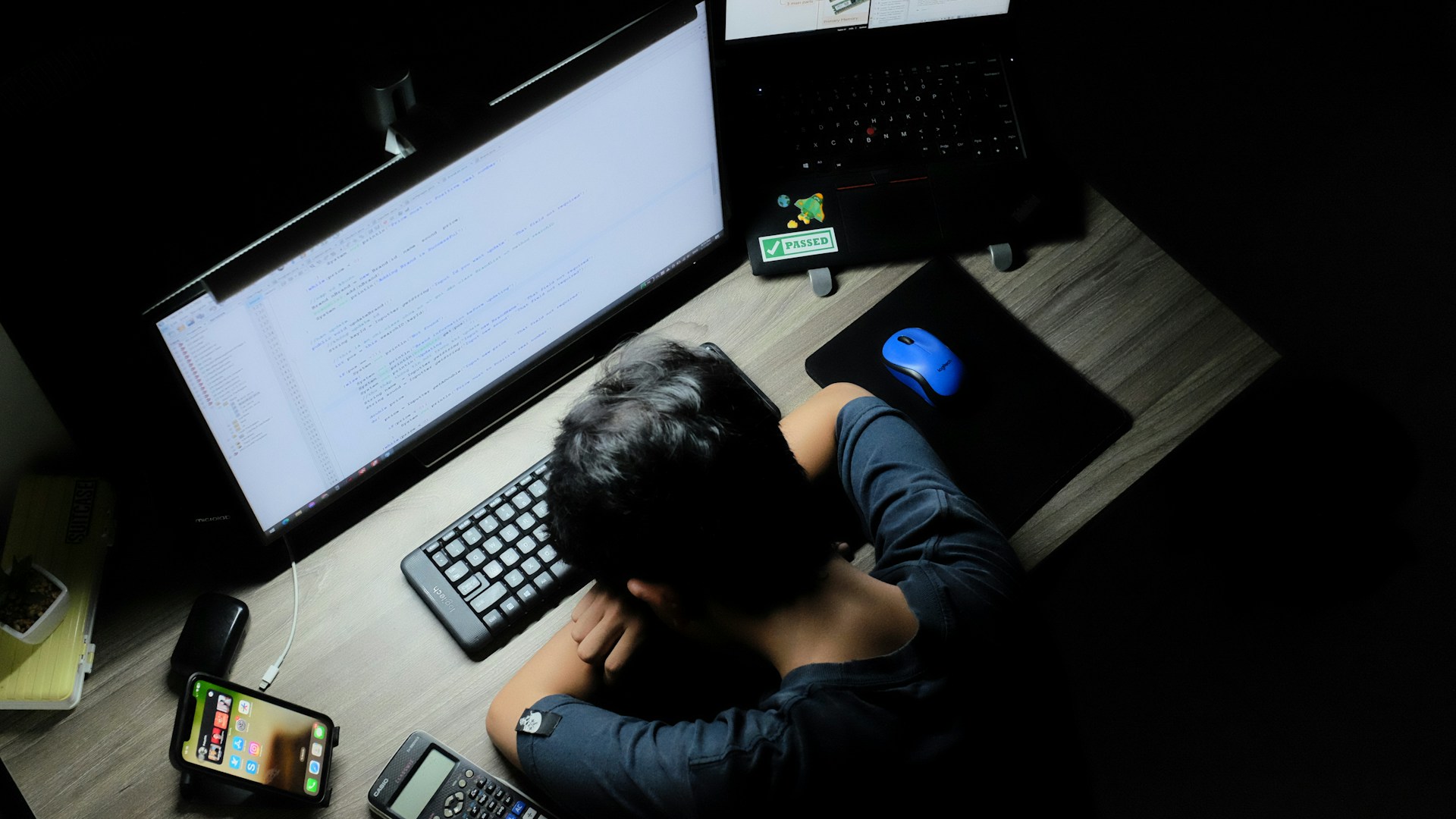
You probably know “tech neck” as a posture problem. Rounded shoulders, a stiff neck, maybe some soreness between your shoulder blades after a long day at your laptop. What most people don’t realize is that the same posture wrecking your neck is quietly doing the same thing to your jaw.
The temporomandibular joint doesn’t operate in isolation. It’s connected, physically and functionally, to the muscles of your neck and upper back. When those muscles spend hours a day compensating for a forward head position, the jaw ends up carrying part of that load. For a lot of people dealing with unexplained jaw pain, clicking, or tension headaches, tech neck is the missing piece.
What Tech Neck Actually Does to Your Body
“Tech neck” describes the posture that develops from looking down at a phone, tablet, or laptop for extended periods, head tilted forward, shoulders rounded, upper back curved. It sounds minor, but the physics behind it are not.
In a widely cited biomechanical analysis, orthopedic spine surgeon Dr. Kenneth Hansraj calculated how much force the neck bears at different angles of forward head tilt. In a neutral, upright position, the head places roughly 10 to 12 pounds of load on the cervical spine. At a 15-degree forward tilt, that jumps to about 27 pounds. At 30 degrees, it’s around 40 pounds. At 60 degrees — a tilt easily reached when looking down at a phone — the load reaches about 60 pounds, roughly what it would feel like to carry a 60-pound child on your neck and shoulders for hours at a time.
Your neck muscles weren’t built to sustain that kind of load for hours every day. Neither was your jaw.
How Neck Posture Pulls the Jaw Out of Position
The muscles that control your jaw don’t stop at your jaw. Several of them attach to or work in coordination with muscles in your neck and the base of your skull. When your head shifts forward:
- Your lower jaw compensates. To keep your airway and bite functional as your head tilts forward, your jaw often shifts slightly backward and downward, changing how your teeth meet and how the jaw joint sits in its socket.
- Supporting muscles overwork. Muscles that would normally hold your head in a neutral position have to work much harder to keep it upright, and that extra tension frequently radiates into the jaw and face.
- The joint loses its resting position. Over time, the temporomandibular joint can settle into a chronically strained position rather than its natural, relaxed alignment, which is when clicking, popping, and discomfort tend to show up.
This is a mechanical, cumulative problem. It’s rarely one bad afternoon at a laptop, it’s the accumulated effect of years of screen habits.
Signs Tech Neck Is Behind Your Jaw Pain
Not every case of TMJ discomfort is posture-related, but there’s a fairly recognizable pattern when it is:
- Jaw soreness or tension that’s worse at the end of a workday or after a long stretch of phone use
- Neck and shoulder tightness that shows up alongside jaw pain, rather than jaw pain on its own
- A tendency to notice your head “jutting forward” in mirrors or photos
- Tension headaches that start at the base of the skull and wrap toward the temples
- Catching yourself clenching your jaw while reading, scrolling, or concentrating on a screen
- Jaw clicking or popping that seems to track with how much screen time you’ve had that day
Why Screen Habits Also Trigger Clenching
Posture is only half of the tech neck story. The other half is what your jaw does while you’re focused on a screen. Many people unconsciously clench their teeth or hold tension in the jaw during concentrated tasks, emails, scrolling, gaming, work deadlines, without any awareness they’re doing it. Combine that unconscious clenching with hours of forward head posture, and the jaw ends up absorbing strain from two directions at once: a joint pulled out of its natural position, and muscles that are also being clenched on top of it.
Reducing Tech Neck’s Impact on Your Jaw
None of this requires giving up your phone or laptop. Small, consistent adjustments make a real difference:
- Bring the screen to eye level. Raise your laptop, monitor, or phone so you’re looking straight ahead rather than down. A stand or a stack of books works for a desktop setup.
- Take a posture break every 30 to 60 minutes. Stand, roll your shoulders back, and gently stretch your neck. Sustained static posture is the real problem, not screen use itself.
- Check in on jaw tension throughout the day. Your resting jaw position should be relaxed, teeth slightly apart, tongue resting gently at the roof of your mouth. If you notice clenching, consciously release it.
- Support your low back. Sitting with good lumbar support makes it easier to keep your head and neck in a neutral position without extra effort.
- Stretch the neck and jaw together. Gentle chin tucks and neck stretches can relieve some of the tension that radiates into the jaw, especially at the end of a workday.
When Posture Fixes Aren’t Enough
Adjusting your setup and habits helps a lot of people, but if jaw pain, clicking, or headaches persist even after you’ve cleaned up your posture, that’s usually a sign the joint itself needs a proper evaluation rather than more self-management. This is especially true if you notice:
- Jaw pain that continues even on lower screen-time days
- Locking, or a jaw that gets stuck open or closed
- Pain that’s interfering with eating or talking
- Frequent headaches that don’t resolve with posture correction alone
At that point, posture is likely one contributing factor among several, and a specialist can determine what else is involved. Our TMJ treatment page covers the full range of causes and treatment options in more depth, and if head pain is a bigger issue than jaw pain for you, our guide to TMJ vs. migraine vs. cluster vs. tension headache can help you figure out which type you’re actually dealing with.
Get an Evaluation That Looks at the Whole Picture
Dr. Katayoun Omrani is a board-certified Orofacial Pain specialist who evaluates the jaw in the context of the neck, muscles, and posture, not as an isolated joint. If tech neck has been quietly driving your jaw pain, a proper evaluation can confirm it and get you a plan that actually addresses the cause instead of just managing the symptoms.
Book a Consultation or call (310) 422-4246 to schedule your evaluation.
11600 Wilshire Blvd., Suite 406, Los Angeles, CA 90025