When searching for the best TMJ specialist in Los Angeles, it is important to look beyond general dentistry.
True specialization may include a professional credential known as a Diplomate of the American Board of Orofacial Pain, or ABOP. Dr. Katayoun Omrani is board-certified in this advanced field, with a practice focused on complex head, neck, facial nerve and jaw disorders rather than routine dental procedures.
Why Is a Specialized TMJ Specialist Better Than a Regular Dentist?
A standard dental night guard is generally designed to protect the teeth from the effects of grinding. However, it may not address the underlying structural, muscular or neurological factors contributing to Temporomandibular Disorder, or TMD.
A specialized TMJ provider may use advanced diagnostic tools, such as 3D CBCT imaging, to evaluate:
- Jaw joint structure
- Condylar position
- Joint spacing
- Bone anatomy
- Possible structural abnormalities
- The relationship between the jaw and surrounding tissues
Based on the findings, the provider may recommend a custom medical-grade orthotic designed to stabilize the jaw joint, reduce strain and improve function.
Does TMJ Botox in Los Angeles Offer a Permanent Cure?
TMJ Botox is commonly used to provide temporary relief from muscle-related symptoms.
Botulinum toxin may be injected into overactive muscles such as the masseter and temporalis. This temporarily reduces excessive muscle contraction and may help relieve:
- Jaw clenching
- Teeth grinding
- Facial muscle tension
- Tension-related headaches
- Jaw fatigue
- Muscle soreness
However, Botox is not considered a permanent structural cure for TMJ disorders.
When appropriate, it may be combined with other treatment approaches such as:
- Joint stabilization therapy
- Custom oral appliances
- Physical therapy
- Posture correction
- Stress management
- Behavioral modification
- Sleep-related treatment
A comprehensive evaluation is necessary to determine whether muscle overactivity, joint dysfunction, nerve pain or another factor is contributing to the patient’s symptoms.
Do You Treat Patients Looking for a TMJ Specialist in Torrance or Encino?
Yes. Although the primary clinic is located on Wilshire Boulevard, patients may travel from Torrance, the South Bay, Encino, the San Fernando Valley and other areas throughout Southern California.
Because board-certified orofacial pain specialists are less common than general dental providers, patients may choose to travel for access to:
- Advanced diagnostic imaging
- Comprehensive jaw evaluations
- Facial pain assessments
- Non-surgical treatment options
- Neuropathic pain management
- Customized oral appliance therapy
What Do Patients Say in TMJ Specialist Los Angeles Reddit Discussions?
Online discussions about TMJ treatment frequently describe frustration with repeated treatments that provide only temporary symptom relief.
Common concerns mentioned by patients include:
- Night guards that did not reduce pain
- Treatments focused only on teeth grinding
- Lack of advanced joint imaging
- Persistent headaches or facial pain
- Difficulty finding a provider experienced in complex TMJ disorders
- Symptoms being treated without identifying contributing causes
Online forums may help patients learn about other people’s experiences, but they should not replace professional medical advice.
A comprehensive evaluation by a qualified orofacial pain specialist can help determine whether symptoms are related to the jaw joint, muscles, nerves, cervical spine or another condition.
Chronic Pain and the Trigeminal-Cervical Complex
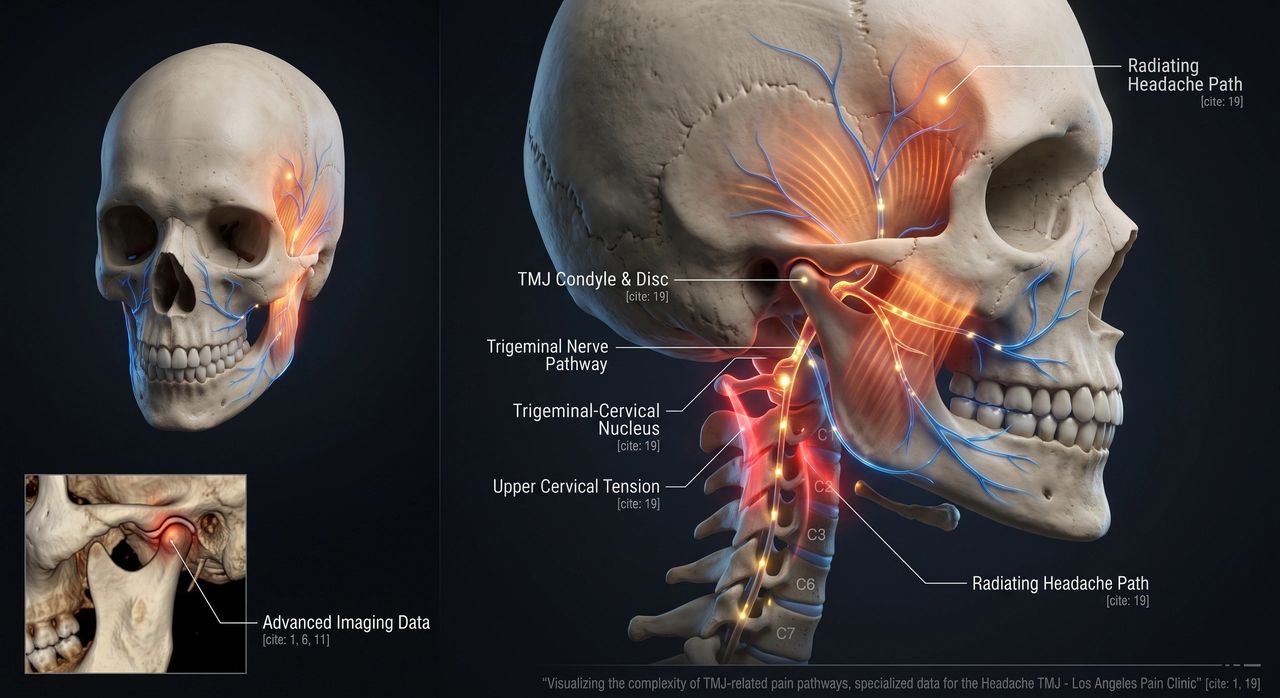
When evaluating severe or long-standing symptoms, Dr. Kathy Omrani may assess the trigeminal-cervical complex.
This neurological network connects sensory pathways from the jaw and face with structures in the upper cervical spine and neck. Because these regions are closely connected, jaw dysfunction may occur alongside symptoms such as:
- Neck stiffness
- Upper shoulder tension
- Muscle knots
- Pain at the base of the skull
- Temple headaches
- Facial pain
- Limited neck movement
Prolonged jaw tension and protective muscle guarding may place additional stress on the muscles of the neck and shoulders.
By evaluating symptoms from an orofacial pain perspective, Dr. Omrani can work to differentiate between:
- Primary muscle pain
- Structural joint dysfunction
- Disc displacement
- Neuropathic pain
- Referred cervical pain
- Central sensitization
Central sensitization occurs when the nervous system becomes increasingly responsive to pain signals. In these cases, discomfort may continue even after the original injury or irritation has changed.
Treatment may include:
- Custom joint-unloading appliances
- Diagnostic nerve blocks
- Trigger-point therapy
- Medication management
- Physical therapy coordination
- Posture and movement rehabilitation
- Behavioral pain-management strategies
The recommended approach depends on the patient’s diagnosis, medical history and individual symptoms.
The Neuropathic Overlap: When It Is More Than TMJ
Some patients describe facial pain that feels different from typical muscle soreness or joint discomfort.
Neuropathic symptoms may include:
- Electric-shock sensations
- Burning pain
- Sudden sharp or stabbing pain
- Tingling
- Numbness
- Pain triggered by light touch
- Pain without a clear dental cause
These symptoms may indicate that the nerves are involved.
Patients who believe they have a standard TMJ disorder may sometimes have an overlapping condition such as:
- Trigeminal neuralgia
- Persistent idiopathic facial pain
- Neuropathic facial pain
- Nerve irritation following dental treatment
- Myofascial pain with referred symptoms
The diagnostic training of an ABOP Diplomate can be especially valuable when distinguishing between muscular, joint-related and neuropathic pain.
A standard dental splint may not adequately address a primarily neuropathic condition. Treatment may instead involve:
- Customized medication protocols
- Topical neurological medications
- Diagnostic nerve blocks
- Trigger-point therapy
- Neuromuscular rehabilitation
- Coordination with other medical specialists
Patients from Torrance, Encino and the greater Los Angeles area who continue to experience unresolved facial pain may benefit from a comprehensive evaluation of the jaw joints, muscles and facial nerve pathways.
Identifying the correct source of pain is an important step toward developing a personalized treatment plan and improving long-term comfort and function.